About us
Locally Owned Dumpster Rental in Rochester Since 2011
One truck, one phone number and a promise to quote honestly. Here is how RCH Bros Dumpster Rental grew into Monroe County’s go-to roll-off company — and why Ray Hargrove still answers the phone.
Our story
It started with a borrowed truck and a house full of somebody else’s junk
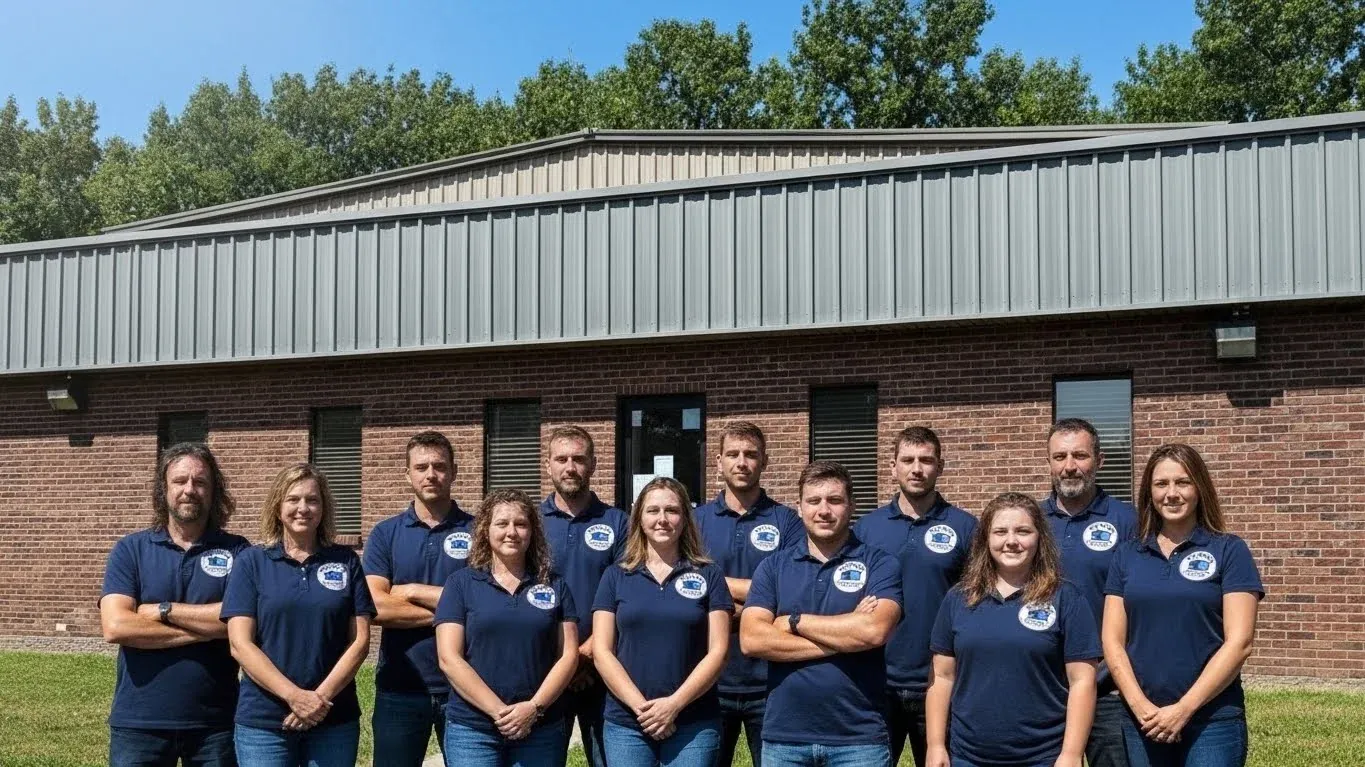
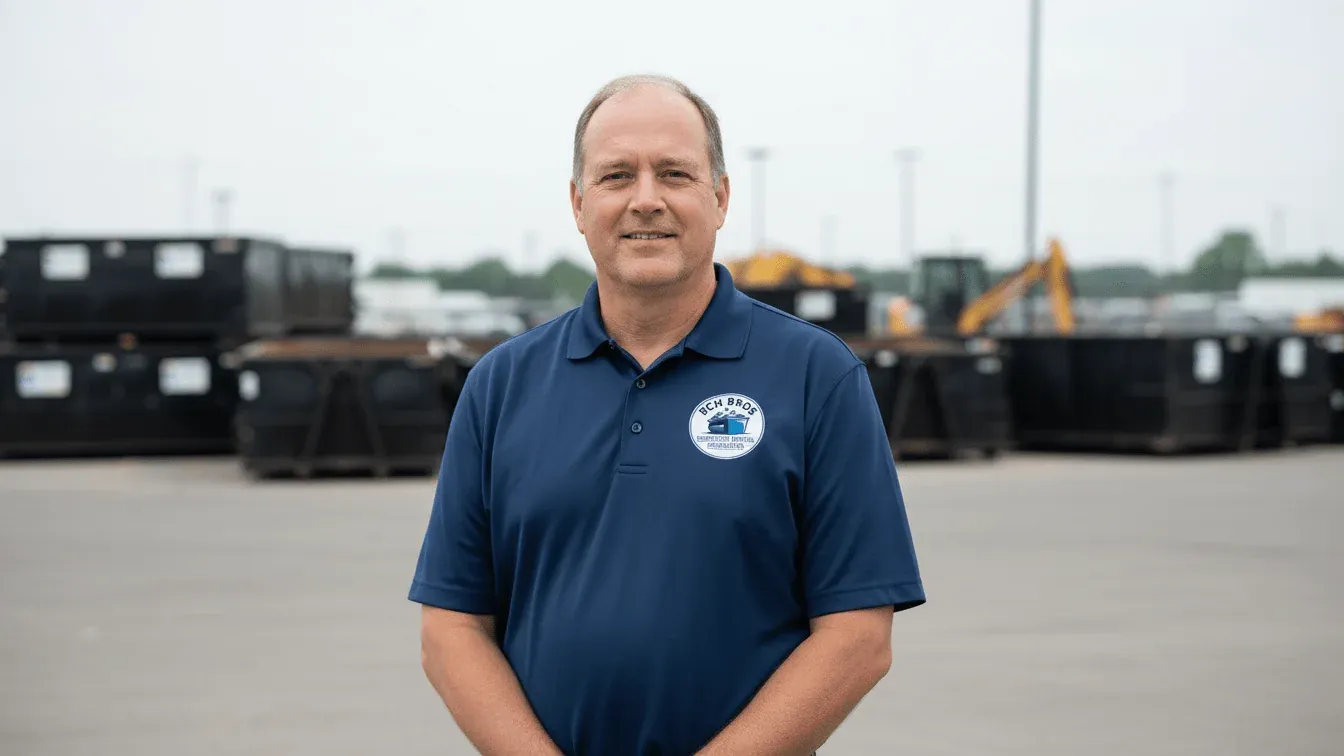
Ray Hargrove grew up here, in a two-family up-and-down in the 19th Ward that his grandparents bought when the film works and the optics shops were still the reason people moved to Rochester, and went to work for a local remodelling crew out of school. He spent most of his twenties in basements and attics, tearing out plaster and lath, stripping shingles in June, breaking out old flatwork, and pulling down porches and back stairs from Maplewood out to Beechwood, watching the same problems repeat themselves. The container never came when it was supposed to. When it did, the invoice had grown. Nobody ever warns a landlord that the plaster and lath off two rooms weighs far more than the pile looks, or that the spoil out of a footing dig will hit legal transport weight in a box that still looks half empty, so the can that sounded generous on the phone is at payload while it is half full, and then it sits in the driveway too heavy to move.
In 2011 he bought a used roll-off truck and four cans, parked them on 595 Hague St on the west side, a few minutes from the Gates line, and started answering the phone himself. Ray still takes most of the calls and still runs the dispatch board. The first job was a shingle tear-off on a two-family in Maplewood for an owner whose previous hauler had canceled twice while the crew stood on the roof waiting. She still calls us, and she still tells the story.
Word moved the way it does here — through contractors, through neighbours, through the man at the supply counter who mentions that the dumpster people actually showed up. Then two things settled it: winter, when one hard lake-effect run or an ice load puts a fortnight of roof, ceiling and tree work on the books over a weekend and every crew in Greater Rochester wants a can at once; and the spring thaw, when the frost lets go, water gets into cellars across the two-family streets, and landlords, families and estates all want a container inside the same three weeks. We added trucks as the calls came in rather than borrowing against volume we did not have yet. 15 years on we run a small fleet, we still dispatch out of Rochester, and the phone still rings at a desk with somebody local behind it.
Why we care about getting the quote right
The dumpster industry has an image problem and it is largely self-inflicted. Low teaser rates, a tonnage allowance buried in the fine print, then a bill with an overage charge nobody explained. We priced against that from day one. When you call, we ask what you are throwing away, what it weighs, how long you need it and where it is going. Then we give you a number that includes delivery, pickup, the rental window and disposal. If we think you are about to order the wrong size, we say so — even when the wrong size is the more expensive one.
What being local actually buys you
It is not a slogan. It means our dispatcher knows which blocks in Maplewood, Dutchtown and the 19th Ward have a single shared drive between two buildings and a maple limb too low for the arm, which two-family turnovers in Beechwood and Marketview Heights have a rear yard the truck cannot reach, which downtown addresses have no driveway at all and therefore need a §104-24 right-of-way permit from the City Engineer, which gravel and dirt pads a loaded truck should not commit to for a day or two after a thaw, which curbside spots are gone until the plowed snow goes, which addresses just across the line are actually Gates, Greece, Irondequoit or Brighton and answer to a different town hall, that most towns in this county ban overnight on-street parking through the winter with the months and hours differing town by town, that a condominium association rather than the City decides where a can may sit, and roughly what a two-family with a full basement, a packed attic, a back shed and three generations of storage produces when it finally gets cleared out. It means that when a storm comes through Greater Rochester and half the region wants a container in the same week, our trucks are already here.
At a glance
- Founded2011
- OwnerRay Hargrove
- BaseRochester, NY
- Container sizes10, 15, 20, 30, 40 yd³
- Service radius~35 miles
- InsuranceFull commercial cover
Our values
Six things we do not negotiate on
We quote it, we honour it
The number on the phone is the number on the invoice. If we get the size wrong, that is our mistake to wear, not yours.
We turn up
A delivery window means a delivery window. If something goes sideways — and occasionally it does — you get a phone call, not silence.
We treat the property like ours
Boards under the rails, a walk of the drop, and a driver who will move the can rather than argue about where it landed.
We sort before we bury
Metal, clean wood, cardboard and brush get separated and recovered where we can, and we will tell you to pull salvage first. It is cheaper for you and better than filling a hole.
We tell you the awkward thing
If your job needs two hauls instead of one, or a permit you did not know about, you hear it before we load the truck.
We answer to neighbours
We live here. Our kids go to school here. There is no head office to hide behind when something goes wrong.
Experience
What 15 years around Rochester containers teaches you
We have seen the mistakes so you do not have to
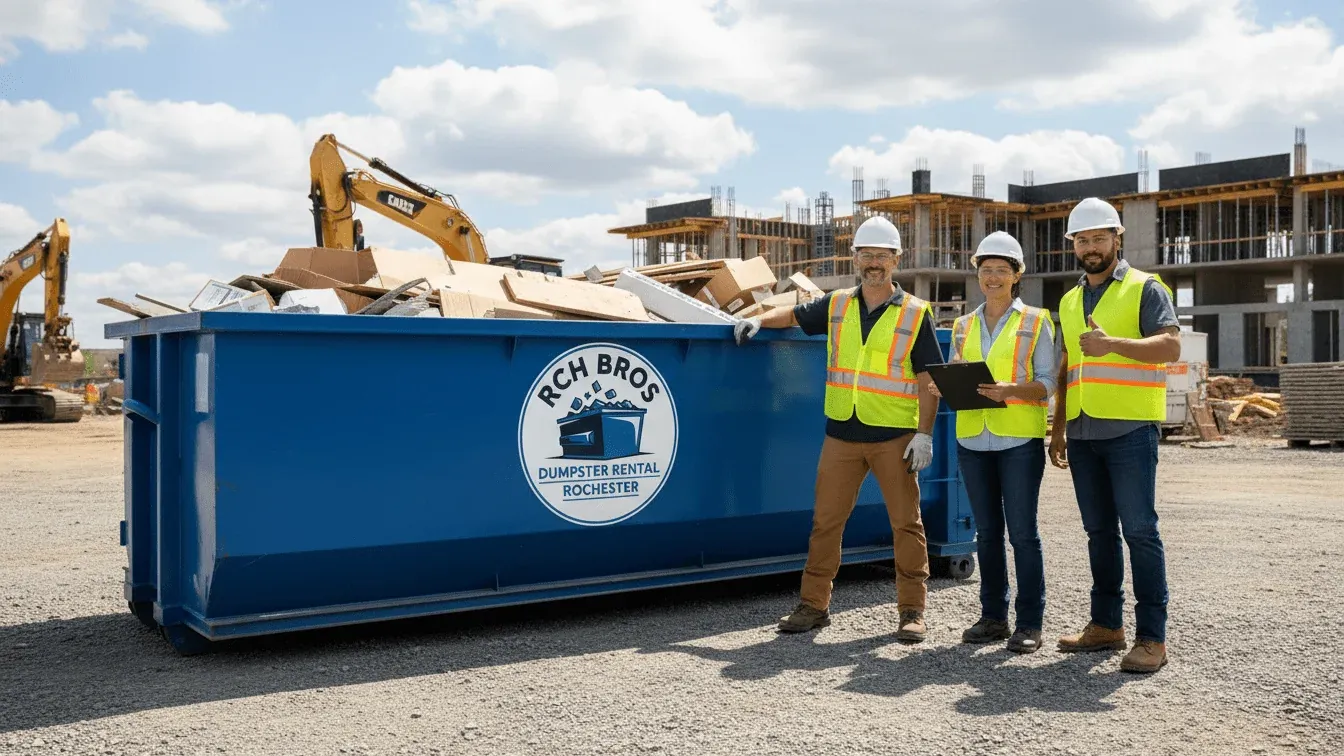
The four that cost people the most money, in order: sizing by volume when the debris is dense, because broken concrete, brick, plaster and lath and footing spoil all hit payload while the box still looks half empty; forgetting that an older Rochester building has a full basement and a full attic in it, so a turnover that reads like a 20 on the ground floor is really a 30 once the stairs are counted; assuming the curb will absorb the overflow, when City Code §20-15F says in as many words that construction waste “shall not be collected by the City”, when the county landfill at Mill Seat takes commercial accounts only, and when the ecopark is a residents’ drop-off for household material rather than a place to take renovation debris; and treating a pre-1980 rental turnover as ordinary demolition, when the paint scraping and window replacement on it is a regulated activity under the EPA lead-safe rules and the debris came off a lead-hazard control job. Every one of those is avoidable with one honest conversation before delivery.
We have cleared full basements and attics out of two-family houses that had not been emptied since the 1970s, turnovers in Beechwood and the 19th Ward where a unit changes hands and forty years goes out in a fortnight, ice-dam damage where the ceilings, the insulation and half the plaster came down before the roof went back on, porch and back-stair rebuilds where the posts came up with their footings still attached, basement work alongside an old heating oil tank that had to come out as a licensed job before anything else moved, limb wood run as clean separate loads of maple, oak and ash after a wet snow, kitchen and bath gut-outs where the cabinets and sheetrock went straight into the can because the City will not take them at the curb, foundation digs and stone-wall repairs that went out by weight rather than volume, restaurant and retail fit-outs, and estate cleanouts where a family had a fortnight to empty a house. Every one of those loads behaves differently at the scale house, and knowing that in advance is most of the job.
Credentials and cover
- Permitted to transport solid waste in New York under 6 NYCRR Part 364
- Full commercial general liability and auto cover — certificates available on request for GCs and property managers
- Workers’ compensation cover for every driver on the road
- Material taken only to permitted, licensed transfer and disposal facilities
- Loads handled to the City’s source-separation requirements under City Code Ch. 20, Art. IV and General Municipal Law §120-aa, with clean cardboard and scrap metal pulled out, liquids and asbestos kept out of every container, and mixed construction and demolition loads taken to a permitted processing facility rather than direct to disposal
Contractors and property managers: ask for our COI when you set up an account. We can usually have it emailed the same day.
Community
We are part of Rochester, not just parked in it
We donate container time to local school and church cleanup projects, we discount storm work for older residents on fixed incomes when a tree comes down, and we sponsor a couple of youth teams that mostly involve us hauling nets around at weekends. None of that makes us special — it is what a business in a city this size is supposed to do.
Rochester is a working city and it has been one for a very long time. Settled in 1788, incorporated as the village of Rochesterville on 21 March 1817 and as a city on 28 April 1834, it milled flour, then grew nurseries, then made film and lenses, and picked up three names doing it: the Flour City, the Flower City and the World’s Image Center. The housing built for the people who worked in all of that is still the housing stock, and it is still what we haul out of. More than half of the city’s housing units were built before 1940, roughly nine in ten predate 1980, and only 38.1 percent are owner-occupied, which is why the phone here is answered mostly for landlords, property managers and contractors rather than homeowners clearing a garage. The city is 35.77 square miles holding about 206,100 people, roughly 5,900 to the square mile, inside a county of about 759,400 and a metro of 1,067,486, the 52nd largest in the country — and the gap between the two is the defining economic geography here. County incomes run well above city incomes, which is why city work is rehab, turnover and cleanout while suburban work is roof, remodel and landscape. The landmarks fill in the rest of the map: High Falls, an 80-foot waterfall in the middle of the city, standing about ten feet lower than it did before the blasting of 1913 to 1919, which is why the height in the old accounts does not match the one you measure today; the Genesee River gorge, cutting through downtown at the crest of the Niagara Escarpment, a roughly 200-foot ridge of Lockport dolostone; the George Eastman Museum, holding the oldest photography collection in the world; the Strong National Museum of Play; the Susan B. Anthony House, a National Historic Landmark and one of the City’s 35 named neighborhoods; the South Wedge, where Frederick Douglass lived after founding The North Star here in 1847; Highland Park and its Lilac Festival, the largest collection of lilac varieties in North America; the Rochester Public Market in Marketview Heights, first opened in 1905; the Erie Canal, whose aqueduct over the Genesee was completed in 1823 and whose completion in 1825 made the towns east and west of us; and Ontario Beach Park up at Charlotte on the lake. The river itself was tamed upstream: the Mount Morris Dam, built by the Army Corps of Engineers between 1948 and 1952 at the north end of Letchworth State Park, is credited with preventing $4.5 billion in flood damage and protecting more than 200,000 people in Rochester, including $210 million during Hurricane Agnes in 1972 alone. The biggest thing happening to the city’s own fabric is the Inner Loop. Built to completion in 1965, the eastern segment was closed on 2 December 2014, filled in and finished on 22 November 2017 at a cost of $21 million, turning a sunken expressway into an at-grade street and creating six acres of shovel-ready land. In January 2025 the Inner Loop North project was approved for a $100 million federal grant to do the same between I-490 and North Union Street, with construction expected to begin in 2027 and roughly 22 acres coming back. Every acre of that is demolition, excavation and construction debris. Around the city, Monroe County is nineteen towns and nine villages, each with its own building department and its own answers — Greece and Irondequoit on the lake, Brighton and Gates and Chili on the city line, Henrietta and Pittsford and Penfield and Webster out through the ring, Perinton with the village of Fairport on the canal, Riga with Mill Seat Landfill in it, Sweden with Brockport, Ogden with Spencerport, Parma with Hilton, and Mendon, Rush, Hamlin, Clarkson and Wheatland out at the edges. Unlike some states, the county here is a real operating layer: it owns the landfill, runs the recycling center and the ecopark, and runs the childhood lead program. I-490, I-390, the Thruway, NY-104 (Ridge Road), NY-441, NY-531, the Lake Ontario State Parkway and the Outer Loop are how we get to all of it. All of that housing generates debris, and we would rather it left less behind than it otherwise would — which is why we pull scrap metal, clean wood, cardboard and clean brick and concrete out of loads instead of tipping the lot, why we tell customers to pull the salvage first, the solid doors, the hardware, the fixtures worth rehoming, and why clean vegetative debris rides as its own separate load for composting or grinding.
About RCH Bros Dumpster Rental
Who owns RCH Bros Dumpster Rental?
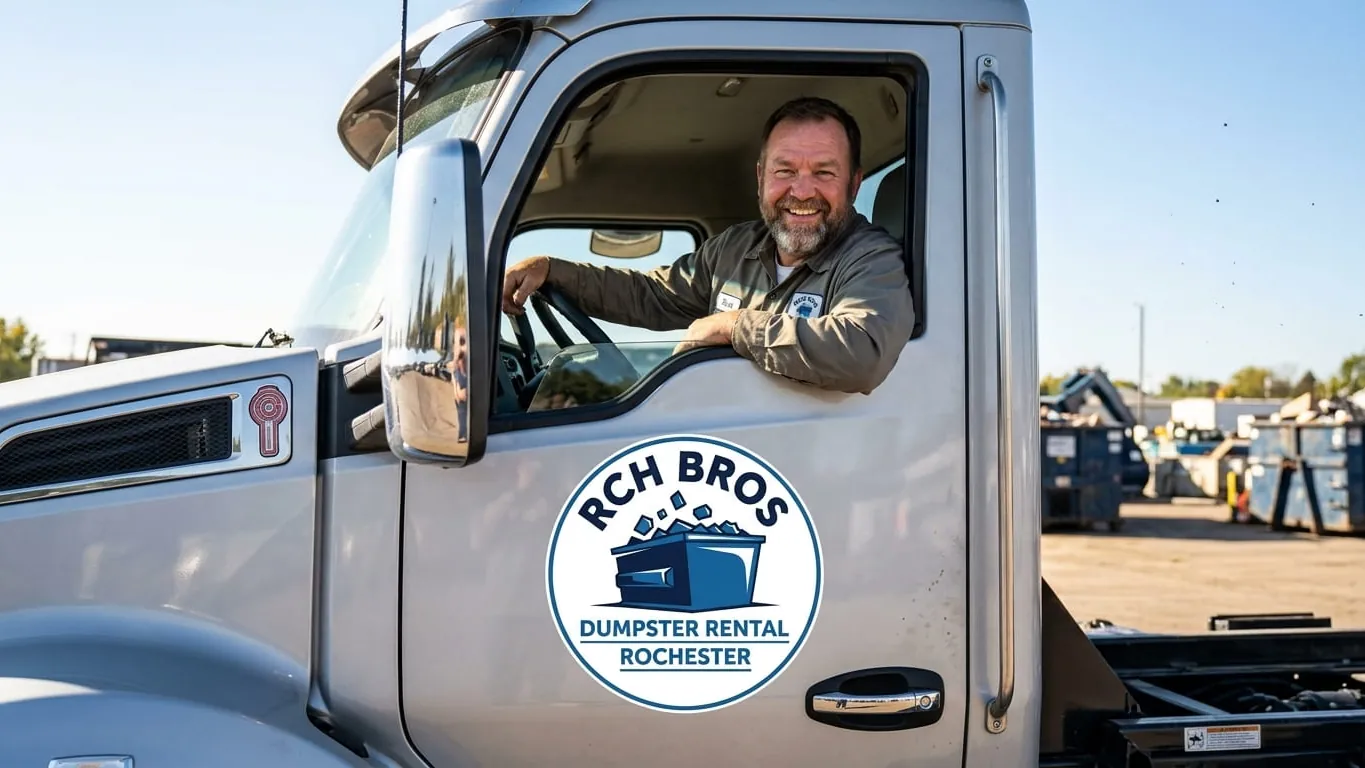
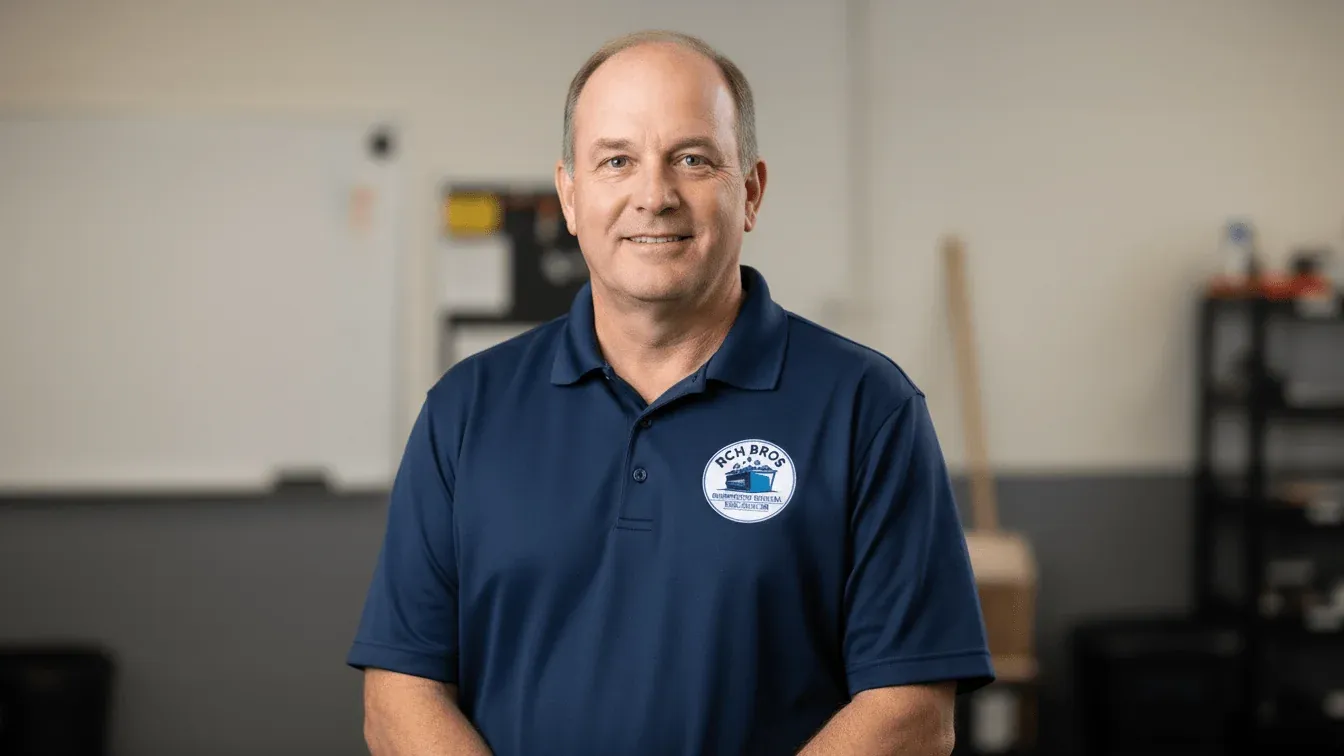
Ray Hargrove, who founded the company in 2011 and still runs it from our yard on 595 Hague St in Rochester. We are independently owned — not a franchise, not a broker reselling somebody else’s trucks, and not a national call center routing your job to whoever bids lowest that morning.
Are you a broker or do you own your trucks?
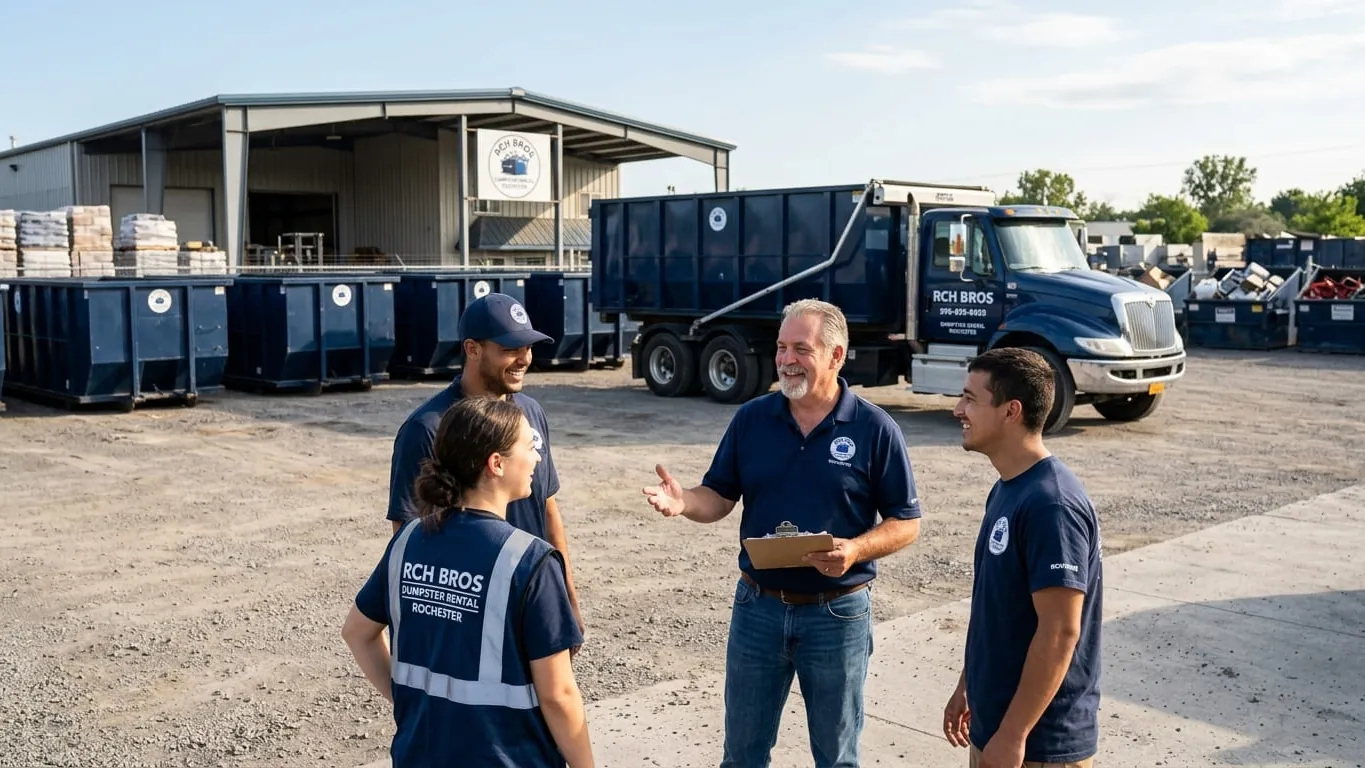
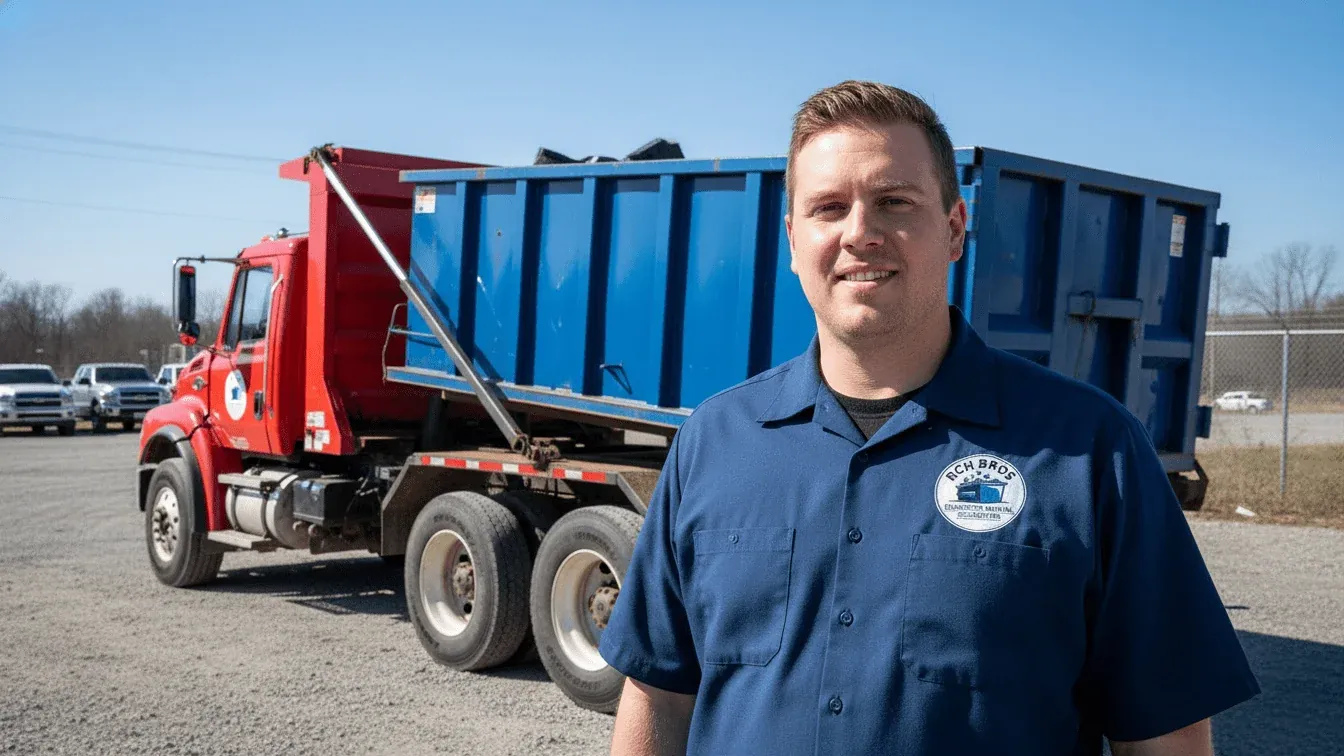
We own our trucks and our containers and we employ our drivers. That matters because a broker cannot promise you a delivery window — they are passing your job to a third party and hoping. When we say Tuesday morning, our dispatcher is looking at our own truck.
What areas do you actually serve?
Rochester and roughly a 35 mile radius across Monroe County: Gates and Chili on our own side of town, Greece and Irondequoit on the lake, Brighton, Henrietta, Pittsford, Penfield, Webster and the village of Fairport out through the ring, and further out to Ogden, Parma, Sweden, Riga, Hamlin, Clarkson, Mendon, Rush and Wheatland when the job is worth the run. The 19th Ward, Park Avenue, the South Wedge, Corn Hill, Maplewood, Charlotte and Beechwood are Rochester neighborhoods rather than separate towns — the City recognises 35 of them — and we run to them daily alongside Downtown, High Falls, Dutchtown, Edgerton, Lyell-Otis, Marketview Heights, Swillburg, Upper Falls, Plymouth-Exchange, Monroe Village, North Winton Village, Browncroft, Cobbs Hill, Highland Park and the rest. Every town out there writes its own building and permit rules, but Monroe County runs the disposal side, so it is one phone number for all of it. Our full service area is listed here.
Are you licensed and insured?
Yes on both. We carry commercial general liability, commercial auto and workers’ compensation cover, and we are permitted to transport solid waste in New York under 6 NYCRR Part 364. Contractors and property managers can request a certificate of insurance when setting up an account and we will usually turn it around the same day.
Do you handle commercial accounts?
We do — builders, remodelers, roofers, property management companies, restaurants and retail. Standing accounts get priority scheduling, next-day swap-outs and consolidated monthly invoicing. See commercial dumpster rental or call to set one up.
Talk to a real person
Talk to Ray or one of the team
No call queue, no chat bot, no form that promises a response within one business day. Call the number and a person in Rochester picks up.
Serving Rochester, Monroe County and Greater Rochester · Mon–Fri 6:30am–5pm, Sat 7am–1pm